Osteopathy
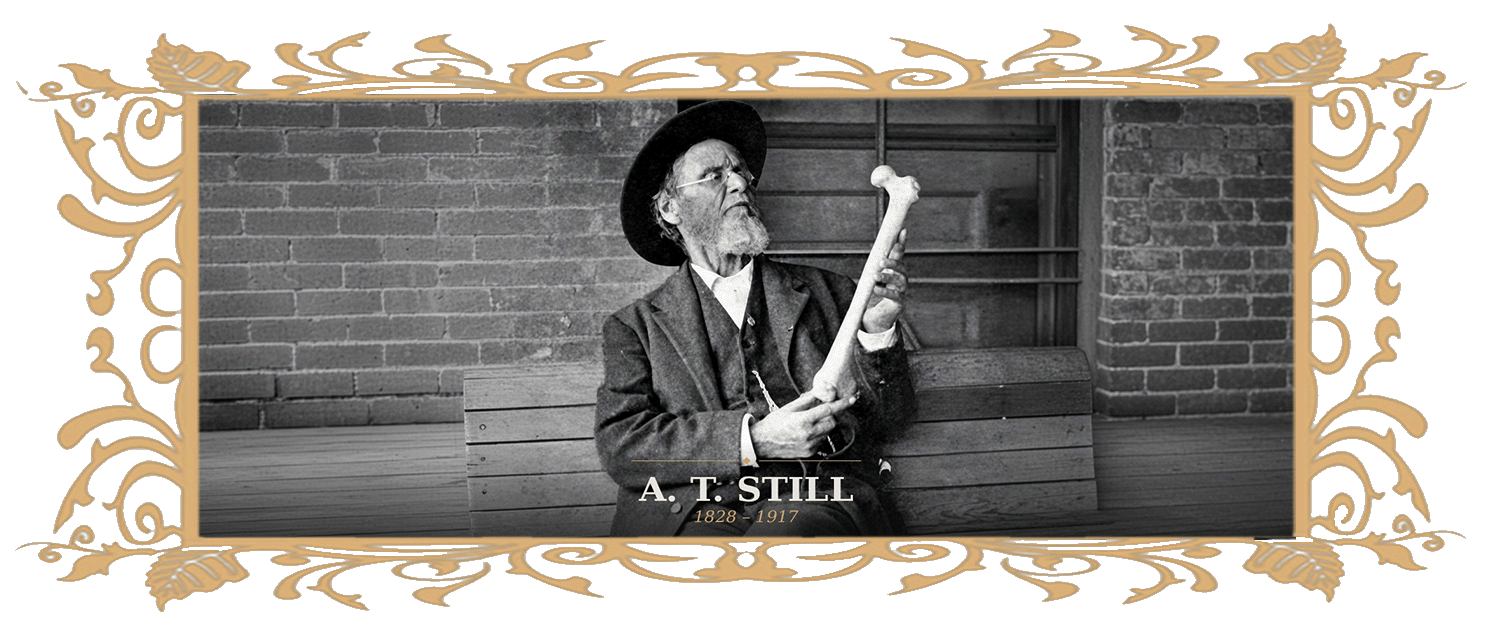
The term osteopathy is derived from the ancient Greek words ostéon (bone) and páthos (suffering). The literal translation therefore means bone suffering. The founder A.T. Still originally tried to find an explanation for a wide variety of disorders solely through the anatomy and physiology of bones. However, the actual causes of complaints (suffering) are sought and corrected in all areas of the human body. For didactic reasons, osteopathy is divided into three sub-areas:
Visceral osteopathy deals with the treatment of internal organs. Various techniques are used to try to resolve restricted movement or restore the missing flexibility of the affected organ.
Parietal osteopathy is the sub-area that deals with the fascia, muscles, bones, and joints of the body.
Craniosacral osteopathy deals with the brain, the spinal cord, and the fluid that surrounds both, the so-called cerebrospinal fluid. In addition, of course, with the nerves originating from the brain and spinal cord, as well as the surrounding fascia and skull bones.